Movies
15 Thoughts I Had While Watching You, Me & Tuscany

You, Me & Tuscany is a romantic comedy directed by Nia Vardalos and produced by Will Packer. The film stars Halle Bailey and Regé-Jean Page in the lead roles, with Bailey playing a woman whose life takes an unexpected romantic turn, while Page portrays a charismatic figure whose path becomes intertwined with hers through a series of emotional and situational complications.
Set against the sweeping backdrop of Tuscany, the film uses the Italian countryside as more than scenery, shaping mood and emotional rhythm throughout the narrative. Built around mistaken identity, romantic tension, and shifting personal truths, the story follows a familiar rom-com structure that leans heavily into atmosphere, chemistry, and visual storytelling rather than reinvention.

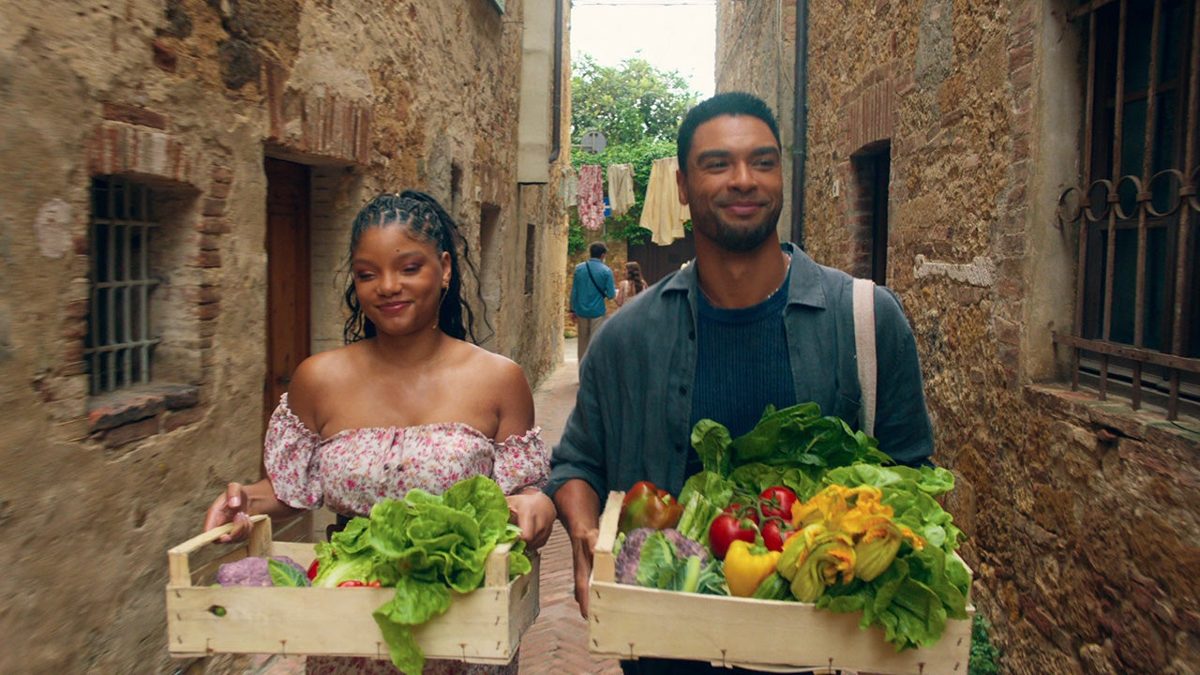
Photo: Universal Studio
The result sits within the modern wave of destination-led romantic comedies, where escapism and star power carry as much weight as the plot itself.
1. Tuscany arrives before the story properly settles, immediately setting the emotional temperature of the film.
2. Everything about this leans into escapism rather than narrative complexity.
3. The opening feels familiar, as if the rom-com language is being revisited rather than rewritten.
4. Halle Bailey anchors the film with a calm, grounded screen presence that cuts through the softness of the setting.
5. Regé-Jean Page carries a controlled charm that fits neatly into the genre’s expectations.
6. The story builds itself on coincidence, which reinforces its predictable structure rather than challenging it.
7. Light and landscape are doing significant visual work throughout, often shaping the mood more than dialogue.
8. The central chemistry stands out as the film’s most consistent pull.
9. There is no attempt here to disrupt rom-com conventions, only to work within them.
10. Supporting characters function lightly within the broader romantic frame.
11. Moments of tension appear briefly before dissolving back into a softer emotional register.
12. The pacing prioritises ease of viewing over narrative urgency.
13. The experience feels designed around mood and atmosphere rather than plot progression.
14 Predictability becomes part of the structure, not a distraction from it.
15. What remains after the credits is less the story itself, and more the visual impression it leaves behind.


Photo: Universal Studio